|
|
|
|
Insights and perspectives on technology, AI, software development, and industry trends from the TrueSolvers team.
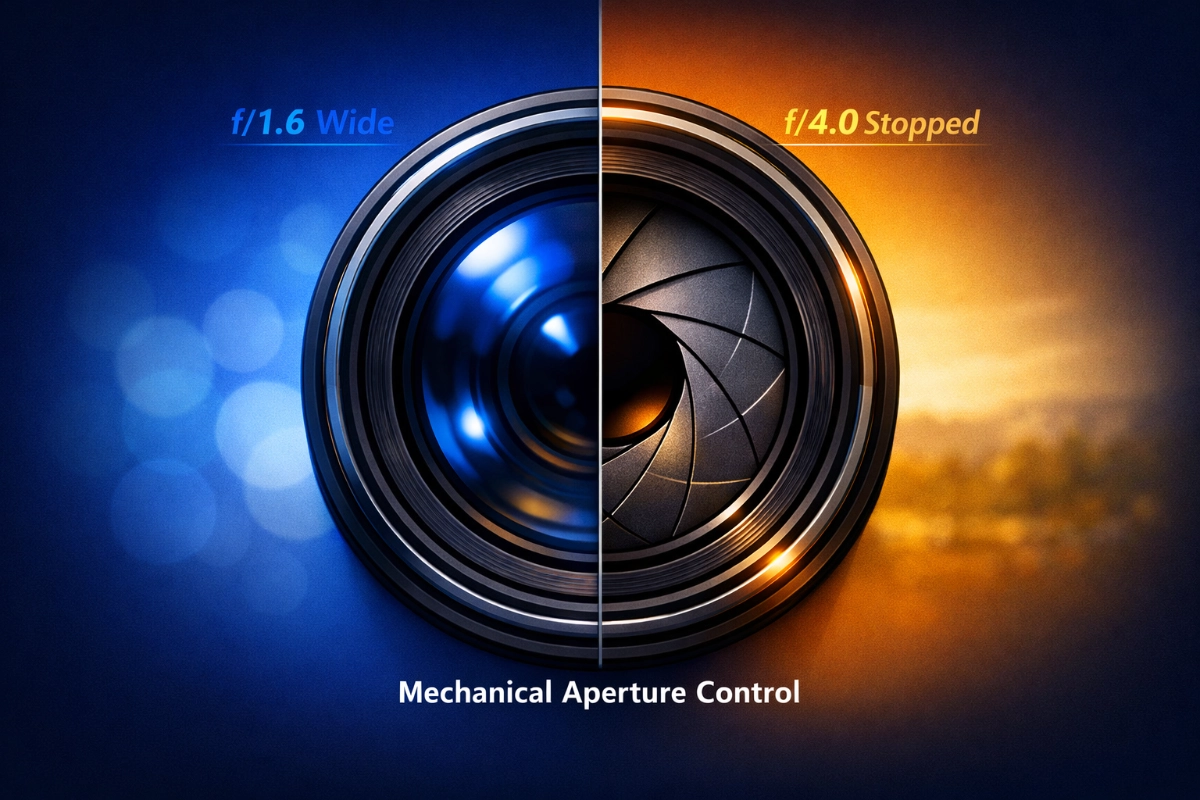
The iPhone 18 Pro will feature variable aperture on its main camera when it launches in September 2026. According to MacRumors, the feature reached late-stage engineering samples, with Apple evaluating optical performance and manufacturing feasibility. Ming-Chi Kuo first reported this capability back in November 2024, though it failed to materialize in the iPhone 17 lineup.
Variable aperture lets the camera physically change the size of the lens opening. Think of it like your eye's pupil expanding in darkness and contracting in bright light. The iPhone's camera can now do the same thing mechanically instead of relying entirely on software adjustments.
Every iPhone from the 14 Pro through the current iPhone 17 Pro uses a fixed f/1.78 aperture on the main camera. That number never changes. The lens opening stays locked at one size whether you're shooting in noon sunlight or midnight darkness. To compensate, iPhones adjust shutter speed and ISO while using computational photography to simulate certain optical effects.
Apple isn't pioneering this technology. Samsung implemented variable aperture on the Galaxy S9 back in 2018. More recently, the Xiaomi 14 Ultra offers stepless adjustment from f/1.63 to f/4.0. But Apple's adoption matters because it signals the company believes computational methods alone can't deliver what photographers need.
Supply chain reports indicate serious manufacturing preparation. LG Innotek and Foxconn will handle main camera modules, while Luxshare ICT and Sunny Optical provide actuator mechanisms. BE Semiconductor supplies assembly equipment for the aperture blade system. That level of supplier coordination suggests Apple moved past planning into active production.
Aperture size determines two critical aspects of photography: how much light hits the sensor and how much of the scene appears sharp from front to back.
The light control part is straightforward. A wide aperture opening (low f-number like f/1.6) allows more light to reach the sensor. A narrow opening (high f-number like f/4) restricts light. This matters because you can adjust exposure optically rather than compensating with shutter speed or ISO changes that introduce other compromises.
Depth of field control is where things get interesting for creative photography. Depth of field describes how much of your photo appears in sharp focus. A wide aperture creates shallow depth of field. Your subject stays sharp while the background blurs into soft bokeh. A narrow aperture creates deep depth of field, keeping both foreground and background elements in focus.
Here's what variable aperture enables:
Light Management
Opening wide in dark conditions gathers maximum light for brighter images with less noise
Closing down in bright sunlight prevents overexposure and uses the sharpest part of the lens
Maintaining optimal exposure without excessive ISO or shutter speed compromises
Creative Control
Shooting portraits at f/1.6 throws backgrounds beautifully out of focus
Capturing landscapes at f/4 keeps everything from near rocks to distant mountains sharp
Adjusting blur intensity based on what the photo needs, not what software decides
This is optical bokeh created by light physics as it passes through the lens. It's fundamentally different from computational portrait mode, which uses software algorithms to guess what should be blurred. The camera creates the effect naturally through hardware.
The key difference: you control what gets blurred based on aperture choice and focusing distance. Computational portrait mode makes educated guesses about depth and applies artificial blur. Sometimes it guesses wrong, leaving weird halos around hair or blurring the wrong elements entirely.
Samsung's Galaxy S9 introduced dual-aperture capability in 2018, switching between f/1.5 for low light and f/2.4 for daylight sharpness. The S10 and Note 10 continued the feature before Samsung discontinued it in 2020 with the Galaxy S20.
The reasons for abandonment were practical. Variable aperture requires mechanical components in extremely tight spaces. You need iris blades, actuator motors, and control systems that can handle millions of adjustment cycles without degrading optical quality. This adds thickness to the camera module and increases manufacturing costs.
Samsung decided to invest in higher-resolution sensors, computational photography improvements, and multi-lens arrays instead. The market in 2020 was moving toward AI-powered scene detection and software-based image enhancement. Variable aperture felt like an expensive hardware solution for problems software could address differently.
From our assessment of Samsung's timing, the technology wasn't mature enough for reliable mass production at smartphone scale. Actuators in 2018 required more space and power than current implementations. Users also didn't fully understand what variable aperture meant or why it mattered, limiting its marketing value. Samsung made a reasonable calculation that the feature's benefits didn't justify the engineering challenges and cost premiums at that specific moment.
The technology disappeared from Samsung's lineup for six years. But it didn't die. Chinese manufacturers kept developing it.
The Xiaomi 14 Ultra revived variable aperture with a crucial advancement: stepless adjustment. Instead of Samsung's two-position system, Xiaomi offers smooth continuous control from f/1.63 to f/4.0.
According to Android Authority, the phone provides automatic aperture switching in standard photo mode for users who don't want manual adjustments. But manual mode gives photographers fine-tuned control over aperture values. That stepless capability essentially matches what professional DSLR and mirrorless cameras offer.
The Xiaomi 13 Ultra used dual aperture with f/1.9 and f/4.0 options. Even that two-step system proved useful for handling the focus challenges created by large smartphone sensors. When you pair a one-inch sensor with a wide aperture, only small areas stay sharp. People on the frame edges appear soft or blurred in group shots. Stopping down to f/4.0 increases depth of field, keeping more elements acceptably sharp.
Actuator technology improved substantially since Samsung's initial attempts. Modern systems can reliably handle millions of adjustment cycles. The components take less space and consume less power. Manufacturing processes matured to the point where stepless variable aperture became economically viable for premium smartphones.
Cambridge Mechatronics explains that lenses accompanying one-inch sensors benefit from continuous variable aperture offering at least four distinct aperture settings. Without this capability, smartphones achieve depth of field control through artificial software blurring that users can't genuinely control. The photographer loses creative authority over which scene areas appear sharp versus blurred.
Variable aperture also addresses chromatic aberrations, those green or violet color fringes that appear at high-brightness transitions. Closing the aperture physically shields the outer lens areas where light experiences greater refraction. This provides cleaner optical correction than complex lens designs or software tricks attempting to fix the problem after the fact.
Video creators face a specific problem that variable aperture solves elegantly: maintaining proper shutter speed while controlling exposure.
Cinematic video follows the 180-degree shutter rule, keeping shutter speed at double the frame rate for natural motion blur. At 24 frames per second, that means 1/48 second shutter speed. At 60 fps, it's 1/120 second. Deviating from this creates either choppy motion or unnaturally smooth video that looks wrong.
Fixed-aperture cameras shooting in changing light must adjust either ISO or shutter speed to maintain proper exposure. Raising ISO introduces noise. Changing shutter speed breaks the 180-degree rule and ruins motion blur characteristics. Neither option is ideal.
Variable aperture adds the third control dimension. When sunlight brightens the scene, the camera closes the aperture to reduce incoming light. Shutter speed and ISO stay constant. The exposure stays correct while maintaining cinematic motion characteristics.
AppleInsider reports that variable aperture's primary iPhone benefit centers on improved video exposure control, allowing optical light reduction instead of inappropriate shutter speed adjustments. This maintains natural motion blur in bright conditions.
Through our evaluation of professional video workflows, this hardware solution addresses a fundamental limitation that software cannot overcome. Computational photography can denoise images, merge exposures, and simulate bokeh. It cannot retroactively fix motion blur caused by wrong shutter speeds. The motion characteristics are baked into the footage at capture time. Variable aperture gives videographers hardware-level control over a creative parameter that software cannot adequately replicate after the fact.
For content creators who shoot video on iPhones, this capability represents a meaningful upgrade. You can move from interior shots to bright outdoor environments without the camera destroying motion blur quality. The iPhone finally handles exposure changes the way professional video cameras do, using aperture adjustments to maintain optimal shutter speeds.
Variable aperture won't transform the iPhone 18 Pro into a full-frame DSLR. Smartphone sensors remain physically tiny. Even at f/1.5, the actual physical aperture opening is minuscule compared to larger camera lenses. This means smartphones naturally produce deeper depth of field than cameras with bigger sensors.
But variable aperture does provide control over the depth of field range that the phone's sensor size allows. For close-up photography like portraits, product shots, and macro work, that control becomes clearly visible and valuable.
The selfie camera is rumored to jump from 18MP on the iPhone 17 Pro to 24MP. That resolution increase combined with variable aperture on the main camera signals Apple's focus on photography quality improvements. The company is investing in hardware capabilities that computational photography cannot fully replicate.
Whether variable aperture justifies waiting for the iPhone 18 Pro versus buying the current 17 Pro depends on how you use your phone's camera:
Wait for iPhone 18 Pro if:
You shoot video regularly and need proper exposure control without shutter speed compromises. Variable aperture gives you genuine cinematic flexibility.
You take portraits or close-up photography where background blur quality matters. Optical bokeh looks more natural than computational alternatives.
You shoot in challenging mixed lighting conditions. Being able to close the aperture in bright zones while opening it for shadows provides better exposure latitude.
You want manual creative control over depth of field rather than accepting what software decides. Variable aperture puts you in charge of which elements stay sharp.
Stick with iPhone 17 Pro if:
Your photography focuses on well-lit scenes where the fixed f/1.78 aperture performs fine. You won't notice much practical difference.
You primarily use wide-angle or ultra-wide lenses, which aren't getting variable aperture. The feature only affects the main camera initially.
Computational portrait mode meets your needs. You're satisfied with software-generated background blur and don't need optical control.
You don't shoot video with attention to proper motion blur and shutter speed. The video benefits won't matter to your workflow.
The technology's real value emerges when you understand what it does and actively use that control. Variable aperture isn't a magic feature that automatically makes photos better. It's a tool that photographers who know what they're doing can leverage for specific creative and technical outcomes.
Apple's timing makes sense. The technology matured enough to handle millions of cycles reliably. Manufacturing costs decreased through supplier experience. And the market for content creation on smartphones grew large enough to justify hardware investments that serve serious photographers and videographers rather than casual snapshooters.
The iPhone 18 Pro's variable aperture represents Apple's acknowledgment that computational photography has limits. Some optical problems require hardware solutions. For photographers who've wanted genuine creative control over depth of field and exposure, this feature delivers something iPhones have never offered before.
Apple's iPhone 18 Pro will introduce variable aperture to the main camera, allowing physical lens adjustments that control light and depth of field. This mechanical feature matches capabilities professional photographers have used for decades, bringing optical control beyond what computational photography can replicate. The technology finally gives iPhone users genuine creative authority over how photos look.
Boost your workflow with our browser-based tools
Share your expertise with our growing community. We accept in-depth articles on Tech, AI, and Dev.
Get StartedFinished reading? Continue your journey in Tech with these hand-picked guides and tutorials.