|
|
|
|
Insights and perspectives on technology, AI, software development, and industry trends from the TrueSolvers team.
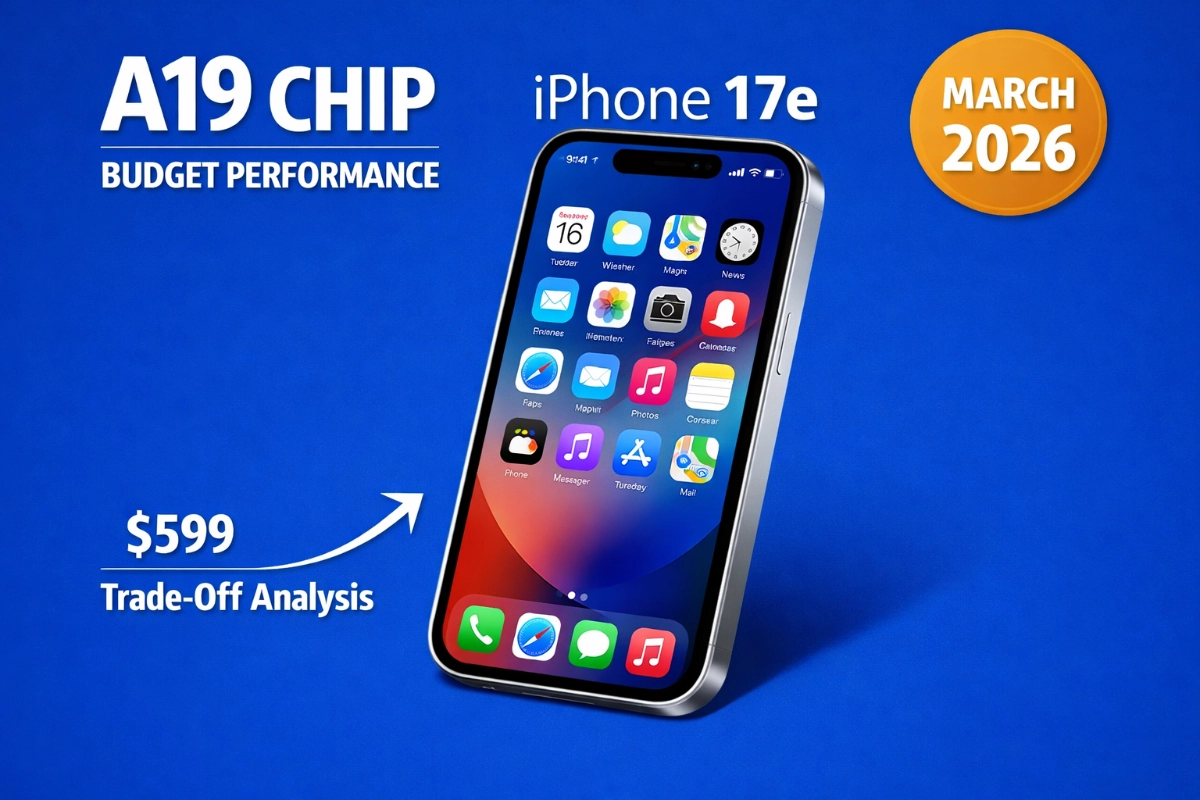
The iPhone 17e uses what the semiconductor industry calls a "binned" chip. During manufacturing, not every processor meets full specifications. Some chips have defective GPU cores but perfectly functional CPUs. Rather than discard these expensive 3nm chips, Apple disables the faulty cores and sells them at lower price points.
The 17e's A19 features four GPU cores instead of five found in the standard iPhone 17. Apple used this exact approach with the iPhone 16e, which scored roughly 15% lower in graphics benchmarks compared to the iPhone 16. Early speculation suggests the 17e will follow the same pattern.
The CPU architecture remains identical to flagship models. Both performance cores run at 4.26 GHz and efficiency cores operate at 2.60 GHz, matching the full-specification A19 found in the $799 iPhone 17. The 17e includes 8GB of LPDDR5X memory running at 8533 MT/s, providing 68.2 GB/s bandwidth. This matches flagship specifications and ensures smooth multitasking.
For typical smartphone tasks, the difference vanishes. Web browsing, social media, messaging, email, and video streaming don't stress the GPU heavily. These activities rely primarily on CPU performance, where the 17e matches flagship capability. You won't notice performance differences scrolling through Instagram or switching between apps.
The GPU reduction surfaces in specific scenarios. Gaming at maximum settings, 4K video editing with effects, AR applications, and certain AI model inference tasks push graphics processing hard. Users who primarily consume content rather than create it won't encounter these limitations regularly.
The A19's CPU architecture dominates Android competitors in the $499-$649 budget flagship segment. Even with reduced GPU cores, the processor maintains substantial advantages in single-threaded performance and efficiency.
According to benchmark documentation, the standard A19 scores 3,608 points in Geekbench 6 single-core testing and 8,810 points multi-core. The A19 Pro achieves 3,895 single-core and 9,746 multi-core. The binned version in the 17e should land close to the standard A19's CPU scores since the CPU cores remain unchanged.
Android budget competitors fall significantly behind in CPU performance:
Samsung Galaxy S25 FE ($649) uses the Exynos 2400, a previous-generation chipset that predates current flagship processors. Samsung chose cost savings over cutting-edge performance.
Google Pixel 8a/9a ($499) relies on Tensor G3/G4 chips optimized for AI tasks rather than raw computing power. Tensor processors consistently trail Apple silicon in traditional benchmarks.
OnePlus 13R ($599) includes Snapdragon 8 Gen 3, delivering strong gaming performance but still falling behind the A19's single-core efficiency and per-watt performance metrics.
The efficiency gap matters more than raw scores suggest. Testing by technical analysis sites shows the A19 Pro operates 28.8% more efficiently than Qualcomm's Snapdragon 8 Elite, consuming 12.1W during multi-core tests compared to 17W for Snapdragon. Even the binned A19 inherits this efficient CPU architecture, translating to better battery life during typical usage patterns.
The performance split between the 17e and flagship models creates a specific pattern. CPU tasks show minimal differences, but graphics-intensive operations reveal measurable gaps.
Benchmark testing shows the standard A19's five-core GPU outperforms the A19 Pro by roughly 15% in graphics tests. The A19 scored 2,112 on 3DMark Solar Bay Extreme versus the A19 Pro's 2,411. On Steel Nomad Light, the A19 achieved 2,566 compared to the Pro's 2,956.
The iPhone 16e established the binning precedent clearly. Its four-core GPU scored 24,188 on Geekbench 6 Metal testing, approximately 15% below the iPhone 16's five-core configuration. The device also showed roughly 5% lower multi-core CPU scores, suggesting Apple applies slight frequency reductions beyond just disabling GPU cores.
The 17e will likely mirror this pattern. Expect near-identical single-core CPU performance but 15-20% lower GPU scores compared to the $799 iPhone 17. For sustained gaming sessions, the standard iPhone 17 maintains higher frame rates and better thermal performance thanks to that extra GPU core and enhanced cooling systems.
From our in-depth assessment of Apple's binning economics across multiple product generations, the strategy serves dual purposes. Manufacturing yields never reach 100% on complex 3nm chips. Binning maximizes revenue from imperfect silicon that would otherwise represent total waste. Simultaneously, it creates legitimate product differentiation without artificial software limitations. The performance gap reflects actual hardware differences, not arbitrary restrictions.
The practical impact depends entirely on usage patterns. Mobile games running at medium settings won't stress the four-core GPU enough to reveal limitations. But running Genshin Impact at maximum graphics or editing 4K video with color grading pushes GPU utilization where that missing core matters.
The iPhone 17e's positioning creates interesting value calculations when examining what competitors offer at similar price points.
Samsung prices the S25 FE $50 above the 17e at $649. You get a larger 6.7-inch display versus the iPhone's 6.1 inches, plus a 120Hz refresh rate compared to Apple's 60Hz panel. The triple-camera system includes 50MP main, 12MP ultrawide, and 8MP telephoto lenses, offering more versatility than the 17e's single-camera approach.
The trade-off comes in processor age. Samsung equipped the S25 FE with the Exynos 2400, which already had been surpassed by newer flagship chips when the phone launched. The Exynos 2400 lags behind the A19 in both single-core performance and efficiency metrics.
Battery capacity reaches 4,900 mAh with fast charging hitting 65% in 30 minutes. Samsung commits to seven years of OS and security updates extending through 2032, matching Apple's typical support windows. Build quality uses Gorilla Glass Victus+ with IP68 rating.
The S25 FE makes sense for users who prioritize screen size, camera options, and high refresh rates over processor performance. It sacrifices computing power for display and photography features.
Google's Pixel budget lineup starts $100 below the iPhone 17e at $499. The Tensor G3/G4 processors focus heavily on AI computational photography rather than gaming performance. Raw benchmark scores fall well behind Apple silicon, but Google's camera processing produces impressive results through software rather than hardware.
The Pixel approach works for photography enthusiasts who value image quality over gaming capability. The price advantage of $100 buys genuine camera innovation at the cost of processor speed and ecosystem features like MagSafe charging.
OnePlus matches the 17e's $599 price while delivering Snapdragon 8 Gen 3 performance that excels in gaming benchmarks. The phone prioritizes raw speed and fast charging over camera sophistication and software support longevity.
The OnePlus strategy appeals to mobile gamers willing to sacrifice camera quality and extended software updates for peak gaming performance. The company's Android skin and update commitments don't match Apple's seven-year support cycle.
The A19's efficiency architecture creates advantages that extend beyond benchmark numbers into real-world battery performance.
Apple increased the 17e's battery capacity from the 16e's 4,005 mAh to approximately 4,500 mAh according to industry reports. Combined with the A19's improved power management, this should deliver substantial endurance gains over the previous generation.
The efficiency improvements stem from TSMC's N3P 3nm manufacturing process and Apple's vertical integration. By designing chips specifically for iOS workloads rather than generic Android devices, Apple optimizes power consumption for common usage patterns.
Testing data shows the A19 Pro achieves 4,019 points single-core and 11,054 points multi-core in Geekbench 6 while consuming just 12.1W of board power during multi-core tests. This represents the best performance-per-watt ratio among smartphone chipsets tested in competitive analyses.
The A19 Pro operates 14.2% more efficiently than Xiaomi's XRING 01, which drew 14.1W during similar testing. Against MediaTek's Dimensity 9400, the advantage reaches 34.2%, with MediaTek consuming 18.4W. The Snapdragon 8 Elite required 28.8% more power to achieve its scores, consuming 17W versus the A19 Pro's 12.1W.
Through careful analysis of how binning affects efficiency characteristics, the CPU architecture remains fundamentally unchanged in binned variants. The missing GPU core reduces power consumption during graphics-intensive tasks while maintaining the efficient CPU design. For users who spend most time on web browsing, messaging, and media consumption rather than gaming, the 17e should deliver battery life approaching or matching flagship iPhones despite the smaller battery capacity.
The 17e supports USB power delivery up to 20W for wired charging and includes MagSafe wireless charging at 15W. These speeds lag behind Android competitors offering 65W+ fast charging, but match typical Apple charging rates across the product line.
The decision matrix for the iPhone 17e depends heavily on usage priorities and ecosystem preferences.
Buy the iPhone 17e if you:
Need strong CPU performance for productivity apps and multitasking but rarely play demanding mobile games. The A19's CPU matches flagship capability for everything except graphics-intensive tasks.
Value Apple ecosystem integration including MagSafe accessories, iCloud syncing, and seamless continuity with other Apple devices. The $599 price provides access to these features without flagship premiums.
Prioritize long-term software support over cutting-edge hardware. Apple's typical seven-year update cycle means the 17e receives iOS updates through 2033, outlasting most Android competitors.
Use your phone primarily for content consumption rather than creation. Web browsing, streaming, social media, and messaging don't stress the reduced GPU enough to reveal performance gaps.
Skip the iPhone 17e if you:
Play graphics-intensive mobile games regularly at maximum settings. The 15% GPU performance gap versus the standard iPhone 17 translates to lower frame rates and reduced visual quality in demanding titles.
Edit video or work with AR applications frequently. These workflows push GPU utilization where the missing core creates noticeable slowdowns compared to flagship models.
Need high refresh rate displays for smoother scrolling. The 17e retains a 60Hz panel while the $799 iPhone 17 offers 120Hz ProMotion for the first time on a non-Pro model. Android competitors at similar prices provide 120Hz displays standard.
Require versatile camera systems with multiple lenses. The single-camera approach limits creative options compared to competitors offering ultrawide and telephoto capabilities, with future iterations like the iPhone 18 Pro expected to bring even more advanced camera capabilities.
Alternative timing considerations:
The iPhone 17e launches March 4, 2026 according to Apple's announced event date. Buyers considering alternatives should note the Samsung Galaxy S25 FE launched September 2025, meaning it's already six months into its product cycle. The Pixel 8a released in mid-2024 and faces replacement soon by the Pixel 9a.
For users heavily invested in Apple's ecosystem, the choice narrows to iPhone 17e versus standard iPhone 17 versus waiting for potential price drops on the 17. The $200 gap between $599 and $799 buys you ProMotion display, an extra GPU core, and potentially better camera hardware. Whether those upgrades justify the premium depends entirely on how you use your device daily.
Apple's iPhone 17e launches March 4, 2026 at $599 with a downclocked A19 processor that creates an unusual competitive position. The chip beats every Android budget phone in CPU performance while trailing flagship iPhones by roughly 15% in graphics tasks. This creates clear winners and losers depending on how you actually use your phone. Here's what the performance gaps mean for real usage and whether the trade-offs justify the price.
Boost your workflow with our browser-based tools
Share your expertise with our growing community. We accept in-depth articles on Tech, AI, and Dev.
Get StartedFinished reading? Continue your journey in Tech with these hand-picked guides and tutorials.