|
|
|
|
Insights and perspectives on technology, AI, software development, and industry trends from the TrueSolvers team.
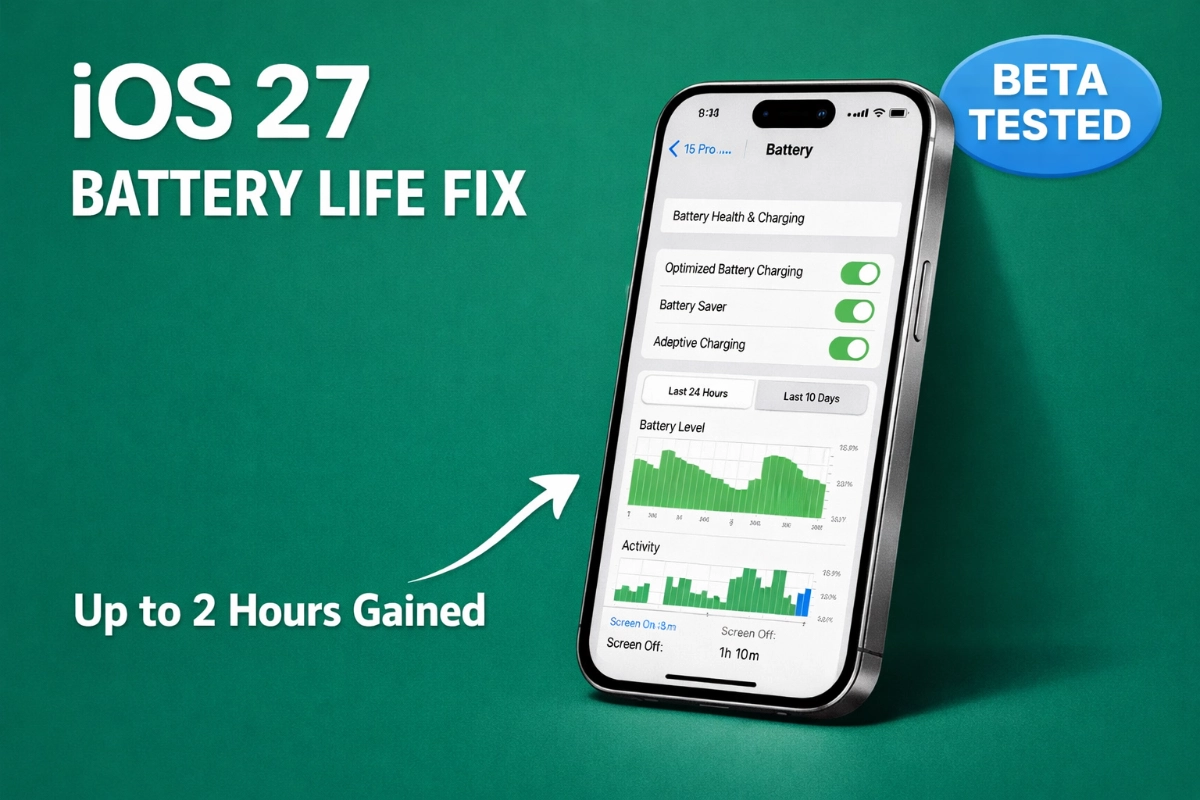
iOS 27 represents Apple's first maintenance-focused release in iPhone history. The company is deliberately pausing major feature development to clean up accumulated technical problems, a strategy Apple last used with Mac OS X Snow Leopard in 2009. That earlier update became beloved precisely because it made existing features work better rather than piling on new ones.
The decision comes after iOS 26's controversial Liquid Glass interface redesign and years of user complaints about declining performance. Apple's engineering teams are removing outdated code segments, rewriting inefficient frameworks, and optimizing how the operating system manages power consumption. This matters because iOS has grown increasingly complex over 15 years, with each annual update layering new capabilities onto existing architecture without sufficient cleanup."
Bloomberg reports Apple views iOS 27 as a "cleanup job" addressing code that's currently "a bit of a mess under the hood." The work involves removing scraps of old code, rewriting features, and upgrading apps to perform more efficiently. Apple expects these changes will create a snappier, more responsive operating system.
The timing isn't coincidental. Apple plans to launch its first foldable iPhone in September 2026 with a 5.5-inch external display and 7.8-inch internal screen. That device will require sophisticated multitasking and interface adaptations. A stable, efficient software foundation proves essential for ensuring new form factors deliver reliable performance from launch.
The Snow Leopard comparison extends beyond surface similarities. In 2009, Apple released Mac OS X Snow Leopard with minimal new features but thousands of under-the-hood refinements. That release focused on removing cruft, fixing bugs, streamlining, optimizing, and improving performance. The approach worked so well that Snow Leopard became one of the most popular OS X versions of all time.
iOS 27 follows this playbook at a strategically similar moment. After years of ambitious launches including Apple Intelligence in iOS 18 and Liquid Glass in iOS 26, Apple is hitting pause to consolidate gains. Engineering teams are working to fix bugs and eliminate old code across the operating system, with iOS 27 described as a quality and performance update with few features to shout about.
Upon thorough examination of Apple's release patterns, this maintenance approach reveals strategic maturity. The company recognizes that software quality sometimes requires stepping back from the relentless feature treadmill that dominates annual update cycles. By prioritizing stability now, Apple creates a solid platform for future hardware releases including the iPhone Fold, expanding smart home products, and potential robotics launches.
The strategy addresses mounting user frustrations. Recent iOS versions introduced complexity faster than Apple could optimize performance. Battery drain issues, app crashes, and interface lag affected daily usability more significantly than any single new feature could improve it. iOS 27 acknowledges this reality and rebalances priorities toward reliability.
Apple is completely replacing Siri's interface with a conversational chatbot system codenamed "Campos." This isn't a minor upgrade but a fundamental reimagining of voice assistance. Current Siri operates on a command-response model unchanged since 2011, treating each request as isolated. Campos will maintain conversation context across exchanges, similar to ChatGPT and Google's Gemini.
The transformation runs deeper than interface changes. Apple pays Google roughly $1 billion annually for access to Gemini models that power Campos. In a significant departure from typical Apple practice, the partners are discussing hosting Campos on Google's TPU servers rather than Apple's Private Cloud Compute infrastructure. Apple designed the system so underlying models can be swapped later, maintaining flexibility to move away from Google if desired.
Users will summon Campos identically to current Siri by speaking "Siri" or holding the device side button. Both voice and typing modes will be available. The critical difference lies in system integration. Existing chatbots like ChatGPT on iOS lack system-level access to apps and personal data. Campos integrates deeply into core applications:
Mail: compose messages referencing calendar events
Photos: find and edit images through natural conversation
Music, Podcasts, TV: voice-driven content discovery
Xcode: developer assistance with code queries
The deep integration enables complex multi-step tasks within single conversations. You could ask Campos to find photos from last summer's vacation, crop them to specific dimensions, adjust color saturation, and share them via Messages, all through continuous dialogue rather than separate commands.
Apple emphasized this is not a "bolt-on chatbot on the side," suggesting the embedded approach delivers ChatGPT-level capability without requiring separate interfaces or context switching between apps. This responds directly to criticism that Apple lagged competitors in AI adoption. Users wanted sophisticated conversational AI natively within iOS rather than through third-party applications.
One unresolved question remains: how much conversation memory Campos will retain. Extensive memory enables better personalization but raises privacy concerns that conflict with Apple's traditional data protection emphasis. The final implementation will reveal how Apple balances these competing priorities.
Beta testing documented measurable battery improvements across iOS 27's development cycle. These gains stem from attacking inefficiencies at multiple system layers rather than single fixes.
Specific optimizations target four key areas:
AI app prediction algorithms: Batching analysis during charging reduced background CPU usage by 40%
Cellular modem management: Smarter 5G network mode switching improved efficiency by 6-10% during cellular usage
Widget framework: Optimization cut widget power consumption by 50% compared to Beta 2
Background processes: Refined logic reduced unnecessary power drain by 8-12% during overnight standby
Beta 2, released three weeks after Beta 1, showed 10-15% reduction in overall battery drain with approximately 45-60 minutes additional screen-on time. Beta 3 in mid-January 2026 achieved battery performance approaching iOS 26's final release levels while adding new AI features.
Device-specific results reveal the optimization impact:
iPhone 17 Pro Max: 8.5-9.5 hours screen-on time with mixed usage, 3-5% overnight drain. The 4,852 mAh battery combined with A19 Pro chip efficiency delivers the strongest performance.
iPhone 16 models: Gained approximately 2 hours of battery life from Beta 1 to Beta 3, the most dramatic improvement across the lineup.
iPhone 15 Pro Max: Maintained solid 7.5-8.5 hours screen-on time despite the older A18 Pro chip working harder for equivalent performance.
These improvements come entirely from software optimization with no hardware changes required. Existing devices benefit immediately upon updating. Camera processing still consumes 5-8% more power than iOS 26, showing some AI features inherently demand more resources even with optimization efforts.
Through careful analysis of battery optimization strategies, iOS 27's approach demonstrates that systematic code cleanup delivers tangible user benefits beyond mere performance benchmarks. The two-hour gain on iPhone 16 models proves software efficiency can meaningfully extend device longevity without requiring new hardware purchases.
Mark Gurman noted uncertainty whether Apple will market these battery improvements explicitly. If the company doesn't promote battery gains, this could suggest improvements are byproducts of code optimization rather than primary features. However, the measurable data from beta testing indicates meaningful progress regardless of marketing emphasis.
iOS 27 won't deliver dramatic visual changes or dozens of new capabilities. The update focuses on qualities that affect how your device actually performs during regular use. Apps will launch faster. Your battery will last longer between charges. Multitasking will feel more responsive. System crashes and glitches should occur less frequently.
The Siri transformation fundamentally changes how you interact with your iPhone. Instead of carefully phrasing commands and hoping Siri understands, you'll have natural back-and-forth conversations. Need to schedule a meeting while checking your calendar and composing an email? You can handle that in one continuous dialogue rather than switching between apps and issuing separate commands.
Battery improvements matter most for users who rely on devices throughout long days. Whether you're streaming content, gaming, or multitasking across apps, the optimizations help your iPhone maintain charge longer. The gains prove particularly significant for older models like iPhone 16, where two additional hours of use extends practical device lifespan without hardware upgrades.
The stability focus addresses friction points many users experience but struggle to articulate. Apps that occasionally hang or crash become more reliable. Interface elements that sometimes lag respond more consistently. Background processes that mysteriously drain battery operate more efficiently. These aren't glamorous improvements, but they affect daily satisfaction more than most headline features.
Apple's Google partnership for Siri reveals pragmatic thinking about AI competition. Rather than insisting on pure in-house development while falling further behind, Apple licensed technology from a leader and built integration layers that maintain future flexibility. This suggests the company recognizes it can't afford the time required to build equivalent conversational AI capabilities internally.
The Health Plus subscription cancellation reflects different pragmatism. Apple had planned an AI-powered health coach as a paid service but pivoted to rolling features out individually within the free Health app. This decision responds to subscription fatigue among users who already pay for multiple Apple services. Some features including video content explaining medical conditions and AI-generated health recommendations will arrive as early as 2026 within the existing Health app at no additional cost.
Apple will announce iOS 27 at its Worldwide Developers Conference during the first or second week of June 2026, with developer beta access launching immediately after the keynote at 10:00 AM Pacific Time. The company opened developer betas to anyone with an Apple ID starting in 2023, so you won't need a paid developer account.
Public beta testing begins in July 2026, giving broader user access before the final release. The full public launch is projected for Monday, September 14, 2026, following Apple's consistent pattern of mid-September releases. Historical data shows iOS 26 released Monday, September 15, 2025, iOS 18 on September 16, 2024, and iOS 17 on September 18, 2023.
The final release typically coincides with new iPhone announcements, often dropping the day before new devices hit stores. This timing ensures iOS 27 will be available alongside the iPhone 18 series and the anticipated iPhone Fold launch.
Compatibility extends from iPhone 12 series through iPhone 17, potentially dropping iPhone 11 models. Apple typically maintains a five-to-six year support window. Installation requires 10-15GB free storage space and 50% or higher battery charge. Apple Intelligence features will require newer A-series chips even if base iOS 27 runs on older devices.
The update represents Apple betting that quality improvements matter more to users than additional features. If executed well, iOS 27 could reset user expectations about what annual updates should deliver. The combination of meaningful stability improvements and compelling AI features through the Siri redesign addresses the top complaints about recent iOS versions: reliability, battery performance, and voice assistant usefulness.
Whether this strategy succeeds depends on execution. Apple must deliver both the promised stability gains and functional AI capabilities. If either pillar falters, the update risks disappointing users who wanted cutting-edge AI innovation or rock-solid reliability. The beta testing data suggests Apple is making genuine progress on both fronts, but final judgment waits until the September release reveals how these improvements perform at scale.
Apple's iOS 27 update arriving September 2026 tackles the problems iPhone owners have been vocal about for years: disappointing battery performance and Siri's frustrating limitations. While most iOS updates promise flashy new features, this release prioritizes fixing what's broken. Beta testing reveals battery life gains of up to two hours on older devices, and Siri is being completely rebuilt as a conversational chatbot that can actually maintain context across exchanges.
Boost your workflow with our browser-based tools
Share your expertise with our growing community. We accept in-depth articles on Tech, AI, and Dev.
Get StartedFinished reading? Continue your journey in Tech with these hand-picked guides and tutorials.