|
|
|
|
Insights and perspectives on technology, AI, software development, and industry trends from the TrueSolvers team.
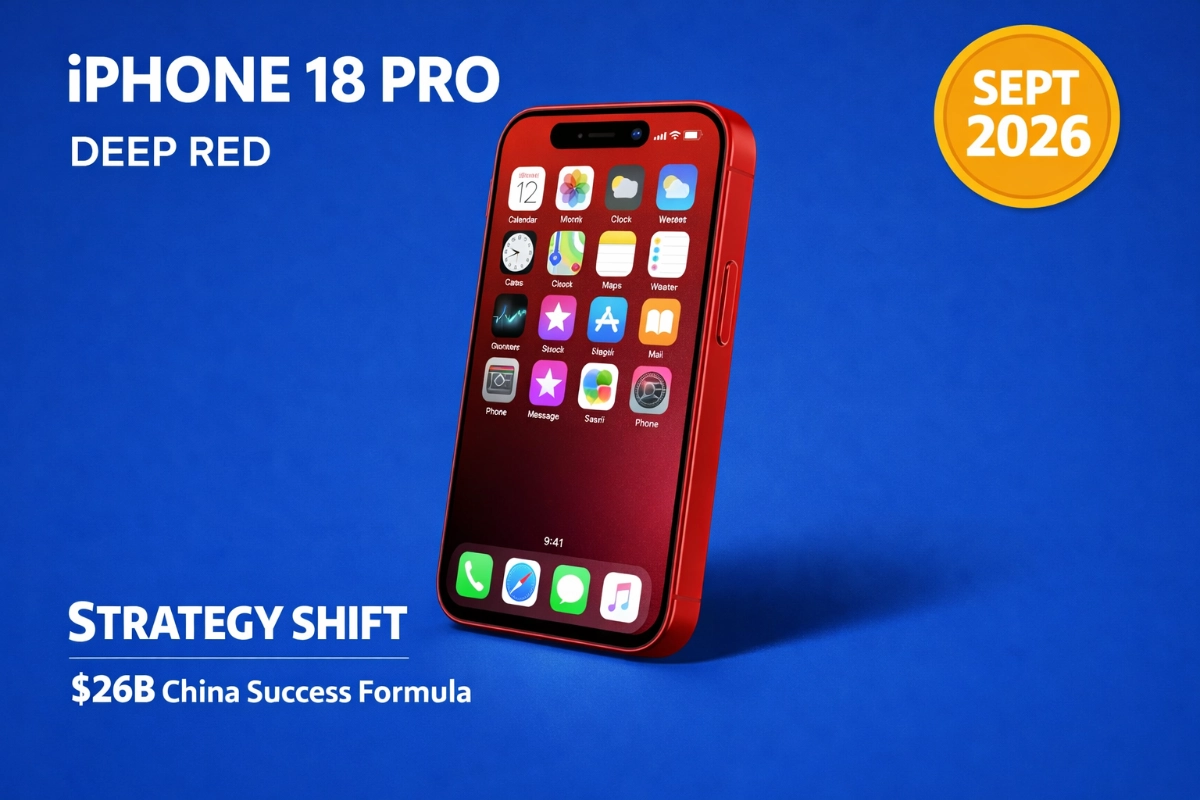
According to Bloomberg's Mark Gurman, Apple is testing a deep red shade specifically for iPhone 18 Pro and Pro Max models. This would mark the first time Pro or Pro Max iPhones have ever appeared in red coloring. The last red iPhones were the standard iPhone 14 and iPhone 14 Plus in PRODUCT(RED), discontinued in 2022.
That discontinuation wasn't arbitrary. When Apple transitioned flagship models to stainless steel and titanium construction, achieving even red finishes became extremely challenging and costly. Anodizing techniques that worked beautifully on aluminum failed to translate to premium materials, resulting in uneven tones or washed-out appearances. The manufacturing complexity simply didn't justify continuing the charitable PRODUCT(RED) partnership on high-end devices.
The iPhone 17 Pro changed everything by shifting back to aluminum construction with heat-forged color integration. This process bonds pigment directly to aluminum, creating unprecedented durability and fade resistance while enabling the rich, saturated finishes that titanium couldn't support. The weight savings proved substantial too, with Pro models dropping 8-12 grams compared to their titanium predecessors.
Now Apple has the technical capability to deliver bold colors on premium devices again. But the strategic question is: why red specifically?
The answer lies in what happened with Cosmic Orange on the iPhone 17 Pro series. Chinese consumers nicknamed the vivid shade "Hermès orange" after connecting it to French luxury brand Hermès' signature Color Code 93. Videos showcasing the orange iPhone went viral on Chinese social platforms Douyin, Xiaohongshu, and Weibo following the September launch.
The cultural resonance went deeper than visual similarity. In Mandarin, the word for "orange" sounds identical to "success," creating organic marketing momentum that Apple's traditional advertising couldn't replicate. Influencers amplified the Hermès association, and the color became a status symbol rather than just a design preference.
The financial results were staggering:
Greater China revenue hit $26 billion in Q4 2025, marking a 38% increase from the previous year's $18.51 billion
iPhone 17 models captured 80% of global iPhone sales in December 2025
iPhone 17 Pro Max alone accounted for 27% of all iPhone sales that month
iPhone 17 Pro took 25% of total sales
Apple captured 20% of Chinese smartphone shipments in the December quarter, up 28% year-over-year
According to IDC senior research director Nabila Popal, the external design changes, particularly the orange color introduction, attracted early upgraders. CEO Tim Cook described demand as "simply staggering" during earnings calls.
This success reversed nearly three years of declining performance in China, where Apple faced intense competition from Huawei, Xiaomi, and Vivo. Chinese consumers chose iPhone 17 despite domestic phones often having superior cameras and more sophisticated AI features, with Apple Intelligence not even available in mainland China. The Hermès orange association positioned iPhone as a luxury good competing with fashion houses rather than a tech device competing on specifications.
The Cosmic Orange phenomenon revealed something Apple's market research had been indicating: 73% of Pro users desired more distinctive color options. The shift from four neutral titanium shades on iPhone 16 Pro to three bold aluminum colors on iPhone 17 Pro reflected this feedback directly.
But Apple learned the psychology runs deeper than preference polls. In markets like China, where technical parity exists across flagship devices, purchasing decisions increasingly depend on social signaling and cultural resonance. Testing showed 89% positive response to Cosmic Orange among 18-34 demographics, while Deep Blue maintained universal appeal across all age groups.
From our in-depth assessment of Apple's color strategy evolution, we're seeing color transform from cosmetic detail into product architecture. Just as M-series chips differentiate Macs and A-series chips define iPhone performance tiers, color now segments psychological positioning. Standard models target practical users with playful pastels like Sage and Lavender. Pro models serve status-conscious buyers with luxury statement pieces. Air products appeal to minimalists. Foldables maintain conservative professionalism for early adopters.
Beijing's electronics subsidy program spending approximately $43 billion in 2025 helped accessibility, and Apple positioned pricing strategically. The base iPhone 17 launched at 5,999 RMB, exactly one yuan below the subsidy threshold, ensuring price-sensitive buyers could benefit from government programs while purchasing premium devices.
The timing captured upgrade cycles from iPhone 13 series users, but the color choice converted interest into actual purchases. When competing on specifications becomes difficult, competing on aspirational value and cultural fit provides differentiation that rivals can't easily copy.
Apple appears eager to capitalize on Cosmic Orange's success with an even bolder finish. While rumors mentioned purple and brown variants, these likely represent different shades within the same red concept rather than entirely separate colors. Sources describe the shade as much deeper than previous Apple reds, possibly resembling red wine in richness and saturation.
The September 2026 launch timeline aligns with Apple's new split-release strategy. According to multiple analysts including Ming-Chi Kuo, Jeff Pu of GF Securities, and Mark Gurman, iPhone 18 Pro and Pro Max will debut alongside Apple's first foldable iPhone in fall 2026. Standard iPhone 18 and budget iPhone 18e won't arrive until spring 2027.
Expected announcement timing falls around September 9-10, with pre-orders opening immediately and sales starting September 18-19. Pricing should remain consistent with recent Pro models: approximately $1,199 for iPhone 18 Pro and $1,399 for Pro Max.
The iPhone 18 Pro specifications provide substance behind the color marketing. The A20 Pro chip built on TSMC's 2-nanometer manufacturing process promises significant efficiency gains over current generation processors. Variable aperture technology on the main 48-megapixel Fusion camera lets the lens physically adjust its opening, giving greater control over light intake and depth of field.
Under-display Face ID remains uncertain for 2026, with disagreement among sources about implementation timing. Testing involves spliced micro-transparent glass windows built into the display, potentially allowing TrueDepth infrared sensors to pass through the panel without distortion. If successful, this could shrink or eliminate the Dynamic Island entirely.
Connectivity advances include Apple's own C2 modem potentially replacing Qualcomm-based modems, promising improved cellular efficiency and better mmWave 5G performance. The next-generation N2 chip brings Wi-Fi 7, Bluetooth 6, and Thread support with faster wireless speeds and lower power consumption.
As Chinese competitors advanced in camera and AI features, Apple needed differentiation beyond specifications. The deep red being tested could evoke premium automotive finishes or luxury fashion houses, creating similar aspirational value to Cosmic Orange's Hermès effect. Burgundy or wine-red tones carry associations with premium brands across multiple categories.
It remains unclear whether Apple will retain Cosmic Orange alongside the new red finish. Given Orange's proven commercial success, offering both options would maximize appeal across different cultural preferences and style sensibilities.
While Pro models get bold reds, Apple's first foldable iPhone reportedly sticks to utilitarian shades: dark grey, black, silver, and white. This conservative approach mirrors early iPhone color strategies focused on broad appeal rather than bold statements.
The device uses a book-style design opening and closing like a book. When open, the display measures around 7.6 inches; when closed, around 5.3 inches, similar to iPad mini when unfolded. Apple reportedly solved the crease problem, with sources describing it as "nearly invisible" when the device unfolds.
From our investigation of Apple's product lineup restructuring, the foldable's restrained color palette creates strategic differentiation within the premium tier itself. At estimated pricing between $2,000-$2,500, the foldable targets early adopters willing to pay for form factor innovation. Avoiding flashy colors prevents the aesthetic from overshadowing the fundamental device category experiment. Meanwhile, Pro models at $1,199-$1,399 serve as "personality" flagships where bold colors maximize cultural resonance and social media shareability.
The foldable won't have a notch or Dynamic Island. Rumors suggest it might not have Face ID at all, instead using a Touch ID side button similar to iPad. The camera sits in the top-left corner of the display for selfies, with a pair of rear cameras. Apple uses the same 2-nanometer A20 chip across fall 2026 iPhones, giving the Fold immediate credibility as a cutting-edge device rather than running a chip already six months old.
Launching the foldable alongside Pro models makes strategic sense. Foldables are expensive, experimental, and aimed at early adopters, the same audience Apple targets with its Pro lineup. A September reveal gives maximum time to refine hinge longevity, crease visibility, and battery optimization. New iOS 27 features will be designed specifically for the foldable iPhone with interfaces and experiences optimized for the larger screen.
The pattern emerging across 2025-2026 releases shows Apple using every available differentiation tool simultaneously: specifications, form factors, timing, and now color psychology.
The staggered launch approach addresses multiple strategic needs:
Manufacturing complexity management for foldable display technology requiring longer production ramps
Marketing attention maximization on high-margin products during peak shopping season
Supply chain efficiency through staggered component demand
Premium/budget segmentation forcing customers wanting fall upgrades toward pricier models
Competitive pressure maintenance by launching experimental products when rivals expect traditional releases
Standard models won't appear until February or March 2027, creating clear temporal separation between price tiers for the first time. Budget-conscious buyers wait additional months, while early adopters and status-conscious consumers get immediate access to the most advanced options.
Color strategy reinforces this hierarchy. Pro models deliver luxury statement pieces with deep red or Cosmic Orange. Standard models get playful pastels. Air models target minimalist aesthetics. Foldables maintain conservative professionalism. Each tier signals different user identities through color alone, before specifications even enter the conversation.
The aluminum unibody introduced with iPhone 17 Pro offers superior color vibrancy compared to titanium while providing the weight reduction and manufacturing flexibility Apple needs to execute this strategy. Heat-forged color integration creates unprecedented durability and fade resistance, enabling the rich tones that would be technically challenging or prohibitively expensive with other materials.
China now represents roughly one-fifth of Apple's total global sales. Reversing the three-year decline required more than incremental technical improvements. The Hermès orange association demonstrated that cultural resonance and luxury positioning could drive measurable revenue increases even in markets where competitors match or exceed Apple's technical capabilities.
Deep red for iPhone 18 Pro represents Apple doubling down on this approach. When buyers choose between similarly-specced devices from different manufacturers, exclusive colors unavailable elsewhere provide immediate visual differentiation that technical specifications take years to develop.
The September 2026 launch will test whether lightning strikes twice, whether red can replicate orange's cultural phenomenon, and whether Apple's bet on color as strategic weapon rather than aesthetic decoration continues paying dividends. For consumers uncertain about upgrade timing, the answer depends less on the color itself and more on whether Apple's broader strategic shifts align with their needs and budget constraints across an increasingly segmented product lineup.
Apple is testing a deep red finish for the iPhone 18 Pro series launching September 2026, but this isn't just another color option. The move signals fundamental changes in how Apple positions premium phones, structures product launches, and competes in markets where technical specifications no longer guarantee wins. What looks like a simple design choice actually reveals Apple doubling down on a strategy that just generated $26 billion in China revenue growth.
Boost your workflow with our browser-based tools
Share your expertise with our growing community. We accept in-depth articles on Tech, AI, and Dev.
Get StartedFinished reading? Continue your journey in Tech with these hand-picked guides and tutorials.